
M E E T T H E H A R M O N Y T E A M
M E E T T H E H A R M O N Y T E A M
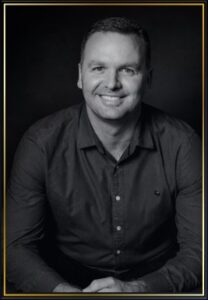 Marno Boshoff
King Price
Keynote Topic
From Good Culture to Great Culture: The Leadership Behaviours That Make It Real
Topic Summary
Organisational culture drives everything from efficiency and effectivity, to longevity, customer experience, staff and customer retention, staff wellbeing, strategy, performance – individual, team and company – and even bottom-line. This is what Marno will tell you – just like he tells the hundreds of organisations that tour King Price every year, to see the culture in action.
(Drop an email to culture@kingprice.co.za if you want to hear him and his team tell you and your colleagues, in person, on a kingdom tour.)
Facilitator Biography
As King Price Insurance’s resident culture evangelist Marno has been instrumental in building the insurer’s culture of ‘insiders’ that’s become pretty famous across SA. But, he’ll tell you that he didn’t do it alone. A major part of his strategy was empowering King Price’s people to co-create the purpose-led, vibrant culture… For the simple reason that people buy into what they help create, and what they feel involved in.
A healthy and highly engaged culture is a non-negotiable in today’s world of business, as evidenced by an ever increasing awareness of the importance of culture among business leaders.
Marno consults with local companies, and has also spoken internationally, on how to build an inclusive, engaged, values-driven culture that’s right for your business and your people
LinkedIn
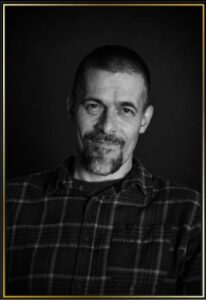 Kirstin Krauss(Phd)
Keynote Topic
From AI literacy to knowledge evaluation: What can we learn from the AI hype cycle?
Topic Summary
Since the release of ChatGPT in November 2022, the world has seen billions of dollars of investments in GenAI, several million AI tools and models were released, with new ones added daily, addressing all kinds of purposes. We have seen AI tool scams that prey on unsuspecting users. We have heard threats of job losses and, at the same time, seen amazing new opportunities. There have been copyright lawsuits against AI companies, because of the unauthorised use of creative works to train large language models (LLMs). AI policy is consistently reactive, both in South Africa and internationally. Scholars are in a scramble to protect the integrity of education and science while trying to understand AI detection strategies. Misinformation generated by AI, or ‘AI fluff’, is flooding the internet and scientists estimate that there are now more AI generated articles on the internet than human written articles. Like many tech releases in the past, we now see a GenAI hype-cycle intensified by an AI-induced infodemic. With all these potential risks and opportunities, AI-driven hype and fear, society needs guidance and principles to inform AI literacy initiatives. In this keynote, Dr Kirstin Krauss presents a synopsis of AIdriven trends that have shaped the GenAI hype-cycle. He also reflects on knowledge evaluation principles that can help business, academia, and government remain relevant and practical regardless of what type of AI tool is thrown at our world.
Facilitator Biography
Dr Kirstin Krauss is a leading authority and subject matter expert in the field of Generative AI and scientific integrity, with a combined 25+ years of extensive experience in higher education, research, and business. Kirstin holds a PhD in Informatics, from the University of Pretoria, South Africa, while his entire career consistently focused on ensuring that ethical standards and integrity are observed as the foundation to research relevance and business leadership. Kirstin has taken on several advisory roles in areas related to research capacity building, doctoral programme reviews, research integrity services, education consulting, and Generative AI. While based in Ireland, Kirstin is also a part-time Research Advisor at Worldwide Information Services (WWIS), where he facilitates workshops and services for the WWIS Academy. In prior roles as a Professor at UNISA and Associate Professor at Rhodes University, he focused predominantly on postgraduate student development and supervision capacity building in the Information Systems discipline. Kirstin has been invited and acknowledged by several associations and universities. These include Ghana Technology University College, Uganda Martyrs University in Kampala, 24 European Conference on Research Methodology for Business and Management Studies, British International Studies Association (BISA), University of Wisconsin-Milwaukee, Academic Conferences International (ACI), International Federation of Library Associations and Institutions (IFLA), and many private and public universities in Southern Africa.
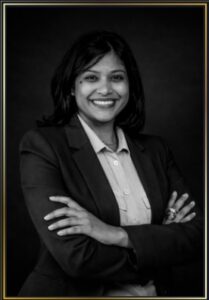 Melissa Subban
Happy Factory
Keynote Topic
Beyond Automation: The Human Skills that will Define the AI Workspace.
Topic Summary
The Future of Work Isn’t Coming — It’s Already Here
While many organisations are still preparing for the future, the most successful ones are already asking a far more powerful question: what can you do that AI never will? In this thought-provoking session, Melissa Subban explores the human edge in driven world. Drawing on her expertise at the intersection of people strategy and AI transformation, she reveals the critical skills that will define tomorrow’s leaders — judgement, connection, creativity, and adaptability.
This is not about competing with AI — it’s about elevating what makes us human.
HR leaders and business owners will walk away with practical insights on how to cultivate these essential capabilities, empowering their teams to lead, adapt, and thrive in the evolving workplace.
Facilitator Biography
Melissa Subban is the founder of HappyFactory and a People Strategy and AI Transformation consultant with 15+ years of experience helping organisations navigate disruption without losing their people in the process.
I work at the intersection of human-centred change, organisational design, and AI adoption- because technology only delivers value when your people are ready, willing, and equipped to use it
My clients include tier-one financial services institutions and corporates across South Africa, and I’m currently expanding into the UK market. I specialise in:
▪ AI change management and adoption strategy
▪ People strategy and organisational design
▪ Executive facilitation and leadership development
▪ Learning design and capability building
▪ Culture transformation and employee engagement
I’m also the creator of The Happiness Reclamation Project- a burnout recovery and resilience programme for leaders and teams navigating high-pressure transformation environments.
My approach blends strategic rigour with human warmth. I bring frameworks that work and facilitation that actually lands- because I believe sustainable transformation has to touch both the head and the heart.
 Jarmaine Lawrence
Canon SA
Keynote Topic
Artificial Intelligence and Leadership Cognition
Topic Summary
Artificial Intelligence is increasingly shaping how leaders think, make decisions,and anticipate the future.
My presentation explores AI as a cognitive enabler within the Anticipatory- Predictive Leadership Capability Model (APLCM), strengthening leadership cognition and strategic foresight while introducing risks like overreliance and reduced transparency.
HR plays a key role in operationalising this capability by developing, embedding, and translating AI-enabled leadership cognition into organisational practice.
Facilitator Biography
Results driven HR professional and leadership researcher with over a decade experience shaping talent, culture and organisational performance. My work centres on how leaders think about the future, and how that thinking impacts the organisations future defined by disruption, uncertainty and rapid change
 Clarence Randall (pt. CCMA Comissioner)
RWA Labour
Keynote Topic
Noteworthy Amendments and the Impact thereof on Business and CCMA Processes
Topic Summary
You are invited to attend a practical employer briefing presented by Clarence Randall on the imminent South African labour law amendments. Following the conclusion of the NEDLAC negotiations, proposed changes to the Labour Relations Act, Basic Conditions of Employment Act, Unemployment Insurance Act, National Minimum Wage Act and Employment Equity Act have been submitted to the Minister of Employment and Labour. The drafts have been submitted for public comment – this process concluded at the end of March 2026. These developments will directly impact hiring practices, dismissals, CCMA disputes, minimum wage compliance and employment equity obligations. This session is designed to help employers, managers and HR professionals understand what is changing and what steps should be taken now to prepare before the new laws come into effect.
Facilitator Biography
Clarence is an active member of the Western Cape Chapter of the South African Society of Labour Law (SASLAW) and is also registered with the SA Board for People Practices (SABPP) – a professional body leading the way for the Human Resources profession in South Africa. He serves as a Part-Time Commissioner for the Commission for Conciliation, Mediation & Arbitration (CCMA) and furthermore serves as a Panelist on numerous public service and private sector Bargaining Councils. He is an accredited facilitator and has conducted both in-house and public course training in the field of employment relations and conflict management. Clarence has further had the pleasure of being a guest speaker at employment law conferences. Moreover, as a consequence of his understanding of the law and his even-handed approach, Clarence has been fortunate enough to chair and initiate disciplinary proceedings for both local government and multi-national companies across the country.
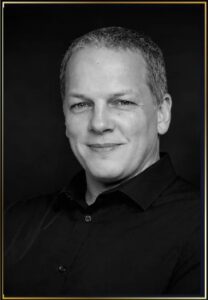 Karl Marais
IM Applied
Panel Discussion Participant
Internet Marketing and AI Automation specialist
Facilitator Biography
Karl Marais is the founder of IM Applied, a digital marketing agency established in 2013. He has spent over a decade helping companies improve visibility, generate leads, and grow revenue.
He specialises in the practical application of AI within business environments, using intelligent systems to remove bottlenecks, reduce friction, and lower the complexity and cost of scaling. His work focuses on making businesses more efficient and enabling sustainable growth. Karl holds a Master’s Degree in Digital Marketing & eCommerce and brings a hands-on, results-focused approach to implementing AI in real-world business contexts.
Marno Boshoff
King Price
Keynote Topic
From Good Culture to Great Culture: The Leadership Behaviours Making It Real
Topic Summary
Organisational culture drives everything from efficiency and effectivity, to longevity, customer experience, staff and customer retention, staff wellbeing, strategy, performance – individual, team and company – and even bottom-line. This is what Marno will tell you – just like he tells the hundreds of organisations that tour King Price every year, to see the culture in action.
(Drop an email to culture@kingprice.co.za if you want to hear him and his team tell you and your colleagues, in person, on a kingdom tour.)
Facilitator Biography
As King Price Insurance’s resident culture evangelist Marno has been instrumental in building the insurer’s culture of ‘insiders’ that’s become pretty famous across SA. But, he’ll tell you that he didn’t do it alone. A major part of his strategy was empowering King Price’s people to co-create the purpose-led, vibrant culture… For the simple reason that people buy into what they help create, and what they feel involved in.
A healthy and highly engaged culture is a non-negotiable in today’s world of business, as evidenced by an ever increasing awareness of the importance of culture among business leaders.
Marno consults with local companies, and has also spoken internationally, on how to build an inclusive, engaged, values-driven culture that’s right for your business and your people.
Karl Marais
IM Applied
Panel Discussion Participant
Internet Marketing and AI Automation specialist
Facilitator Biography
Karl Marais is the founder of IM Applied, a digital marketing agency established in 2013. He has spent over a decade helping companies improve visibility, generate leads, and grow revenue.
He specialises in the practical application of AI within business environments, using intelligent systems to remove bottlenecks, reduce friction, and lower the complexity and cost of scaling. His work focuses on making businesses more efficient and enabling sustainable growth. Karl holds a Master’s Degree in Digital Marketing & eCommerce and brings a hands-on, results-focused approach to implementing AI in real-world business contexts.
Kirstin Krauss(Phd)
Keynote Topic
From AI literacy to knowledge evaluation: What can we learn from the AI hype cycle?
Topic Summary
Since the release of ChatGPT in November 2022, the world has seen billions of dollars of investments in GenAI, several million AI tools and models were released, with new ones added daily, addressing all kinds of purposes. We have seen AI tool scams that prey on unsuspecting users. We have heard threats of job losses and, at the same time, seen amazing new opportunities. There have been copyright lawsuits against AI companies, because of the unauthorised use of creative works to train large language models (LLMs). AI policy is consistently reactive, both in South Africa and internationally. Scholars are in a scramble to protect the integrity of education and science while trying to understand AI detection strategies. Misinformation generated by AI, or ‘AI fluff’, is flooding the internet and scientists estimate that there are now more AI generated articles on the internet than human written articles. Like many tech releases in the past, we now see a GenAI hype-cycle intensified by an AI-induced infodemic. With all these potential risks and opportunities, AI-driven hype and fear, society needs guidance and principles to inform AI literacy initiatives. In this keynote, Dr Kirstin Krauss presents a synopsis of AIdriven trends that have shaped the GenAI hype-cycle. He also reflects on knowledge evaluation principles that can help business, academia, and government remain relevant and practical regardless of what type of AI tool is thrown at our world.
Facilitator Biography
Dr Kirstin Krauss is a leading authority and subject matter expert in the field of Generative AI and scientific integrity, with a combined 25+ years of extensive experience in higher education, research, and business. Kirstin holds a PhD in Informatics, from the University of Pretoria, South Africa, while his entire career consistently focused on ensuring that ethical standards and integrity are observed as the foundation to research relevance and business leadership. Kirstin has taken on several advisory roles in areas related to research capacity building, doctoral programme reviews, research integrity services, education consulting, and Generative AI. While based in Ireland, Kirstin is also a part-time Research Advisor at Worldwide Information Services (WWIS), where he facilitates workshops and services for the WWIS Academy. In prior roles as a Professor at UNISA and Associate Professor at Rhodes University, he focused predominantly on postgraduate student development and supervision capacity building in the Information Systems discipline. Kirstin has been invited and acknowledged by several associations and universities. These include Ghana Technology University College, Uganda Martyrs University in Kampala, 24 European Conference on Research Methodology for Business and Management Studies, British International Studies Association (BISA), University of Wisconsin-Milwaukee, Academic Conferences International (ACI), International Federation of Library Associations and Institutions (IFLA), and many private and public universities in Southern Africa.
Melissa Subban
Happy Factory
Keynote Topic
Beyond Automation:
The Human Skills that will Define the AI Workspace.
Topic Summary
The Future of Work Isn’t Coming — It’s Already Here
While many organisations are still preparing for the future, the most successful ones are already asking a far more powerful question: what can you do that AI never will? In this thought-provoking session, Melissa Subban explores the human edge in driven world. Drawing on her expertise at the intersection of people strategy and AI transformation, she reveals the critical skills that will define tomorrow’s leaders — judgement, connection, creativity, and adaptability.
This is not about competing with AI — it’s about elevating what makes us human.
HR leaders and business owners will walk away with practical insights on how to cultivate these essential capabilities, empowering their teams to lead, adapt, and thrive in the evolving workplace.
Facilitator Biography
Melissa Subban is the founder of HappyFactory and a People Strategy and AI Transformation consultant with 15+ years of experience helping organisations navigate disruption without losing their people in the process.
I work at the intersection of human-centred change, organisational design, and AI adoption- because technology only delivers value when your people are ready, willing, and equipped to use it
My clients include tier-one financial services institutions and corporates across South Africa, and I’m currently expanding into the UK market. I specialise in:
▪ AI change management and adoption strategy
▪ People strategy and organisational design
▪ Executive facilitation and leadership development
▪ Learning design and capability building
▪ Culture transformation and employee engagement
I’m also the creator of The Happiness Reclamation Project- a burnout recovery and resilience programme for leaders and teams navigating high-pressure transformation environments.
My approach blends strategic rigour with human warmth. I bring frameworks that work and facilitation that actually lands- because I believe sustainable transformation has to touch both the head and the heart.
LinkedIn
Jarmaine Lawrence
Canon SA
Keynote Topic
Artificial Intelligence and Leadership Cognition
Topic Summary
Artificial Intelligence is increasingly shaping how leaders think, make decisions,and anticipate the future.
My presentation explores AI as a cognitive enabler within the Anticipatory- Predictive Leadership Capability Model (APLCM), strengthening leadership cognition and strategic foresight while introducing risks like overreliance and reduced transparency.
HR plays a key role in operationalising this capability by developing, embedding, and translating AI-enabled
leadership cognition into organisational practice.
Facilitator Biography
Results driven HR professional and leadership researcher with over a decade experience shaping talent, culture and organisational performance. My work centres on how leaders think about the future, and how that thinking impacts the organisations future defined by disruption, uncertainty and rapid change.
Clarence Randall
(pt. CCMA Comissioner)
RWA Labour
Keynote Topic
Noteworthy Amendments and the Impact thereof on Business and CCMA Process
Topic Summary
You are invited to attend a practical employer briefing presented by Clarence Randall on the imminent South African labour law amendments. Following the conclusion of the NEDLAC negotiations, proposed changes to the Labour Relations Act, Basic Conditions of Employment Act, Unemployment Insurance Act, National Minimum Wage Act and Employment Equity Act have been submitted to the Minister of Employment and Labour. The drafts have been submitted for public comment – this process concluded at the end of March 2026. These developments will directly impact hiring practices, dismissals, CCMA disputes, minimum wage compliance and employment equity obligations. This session is designed to help employers, managers and HR professionals understand what is changing and what steps should be taken now to prepare before the new laws come into effect.
Facilitator Biography
Clarence is an active member of the Western Cape Chapter of the South African Society of Labour Law (SASLAW) and is also registered with the SA Board for People Practices (SABPP) – a professional body leading the way for the Human Resources profession in South Africa. He serves as a Part-Time Commissioner for the Commission for Conciliation, Mediation & Arbitration (CCMA) and furthermore serves as a Panelist on numerous public service and private sector Bargaining Councils. He is an accredited facilitator and has conducted both in-house and public course training in the field of employment relations and conflict management. Clarence has further had the pleasure of being a guest speaker at employment law conferences. Moreover, as a consequence of his understanding of the law and his even-handed approach, Clarence has been fortunate enough to chair and initiate disciplinary proceedings for both local government and multi-national companies across the country.